


Level 3 · Tracks · Ages 13–16
Game DevBuild real games with real physics.
Your child will leave with a portfolio of complete games — physics, levels, sound, multiplayer — and a mobile game installed on their own phone they can show their friends.
- Playable game
- Mobile app
- Physics sim
- Open-source PR
Week by week · 16 weeks · 8 projects
What they build, when.
Weeks 1–4PYTHON + FIRST GAMES
Python + Turtle Art
Variables, loops, functions, lists through drawing. Build a fractal generator.
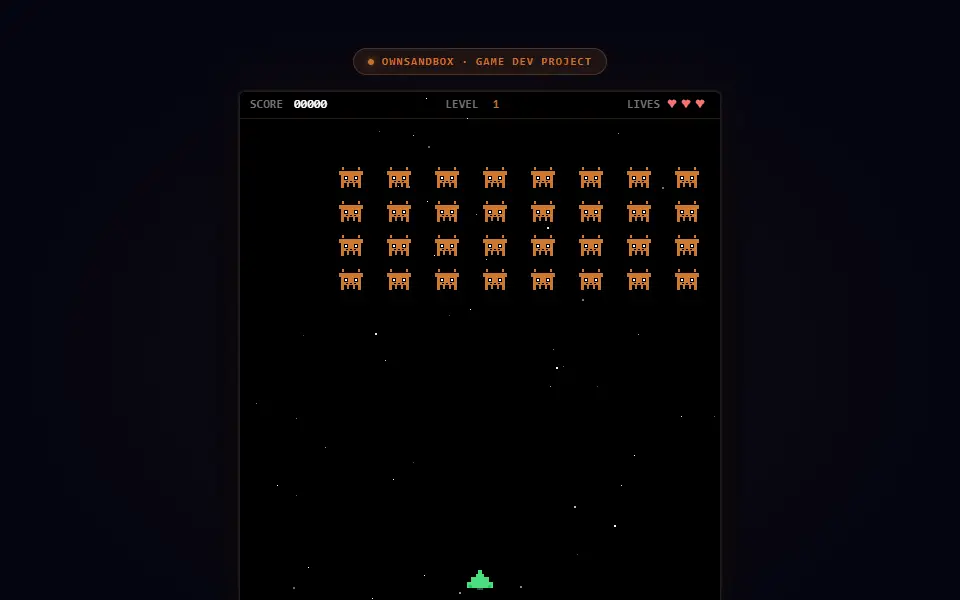
Space Invaders
Aliens fall with REAL gravity. Shoot them! Score, lives, levels, sounds, power-ups.
Play a real oneWeeks 5–8PHYSICS + COMPLEX GAMES
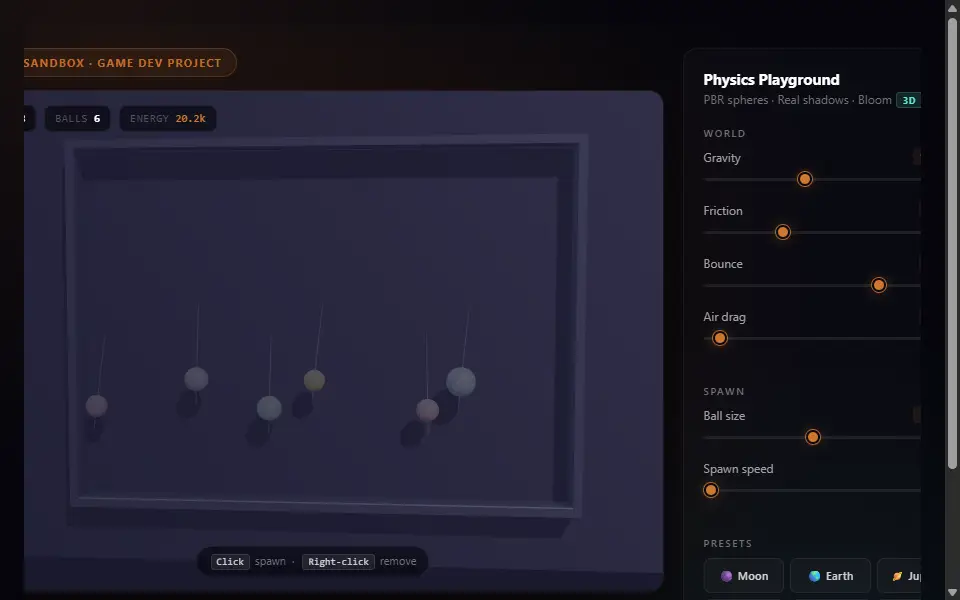
Physics Sandbox
Bouncing balls. Gravity sliders. Friction control. Collision detection.
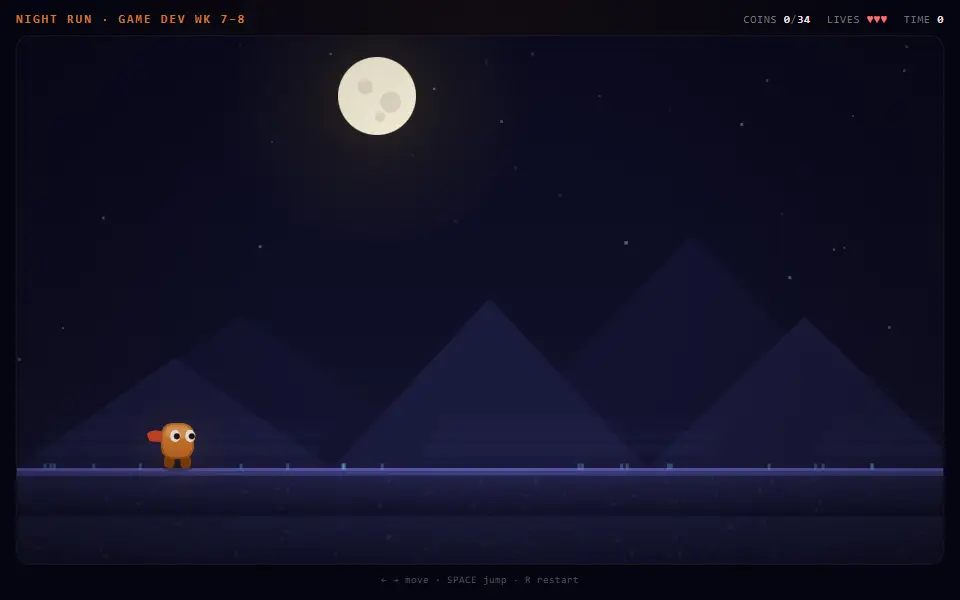
Play a real onePlatformer
Side-scrolling world. Jump on platforms. Collect coins. Avoid enemies. Level design.
Play a real oneWeeks 9–12MOBILE + REAL USERS
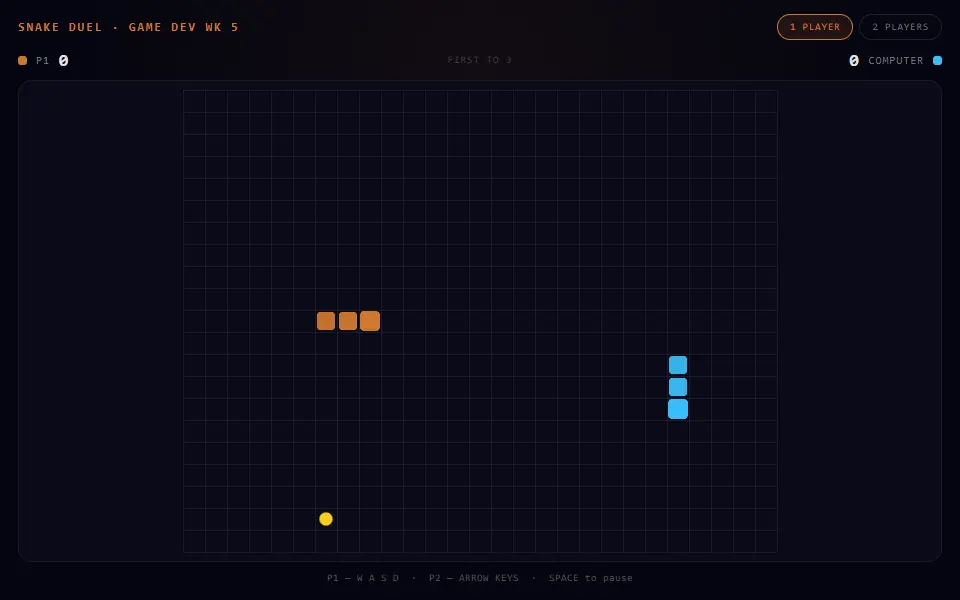
Snake + 2-Player Battle
Classic snake → then 2 players compete on same screen. Leaderboard.
Play a real oneMobile Game
Take their BEST game → rebuild for mobile → install on real phone.
Play a real oneWeeks 13–16TEAM + SHOW DAY
Team Game Jam (pairs)
2 students, 1 game, 2 weeks. Plan → divide tasks → build → playtest.
Play a real oneOpen Source Contribution
Publish game on GitHub. Write README. Other students can fork it.
SHOW DAY
Present the best game live to the family. Live demo, live Q&A.
What your child will ship
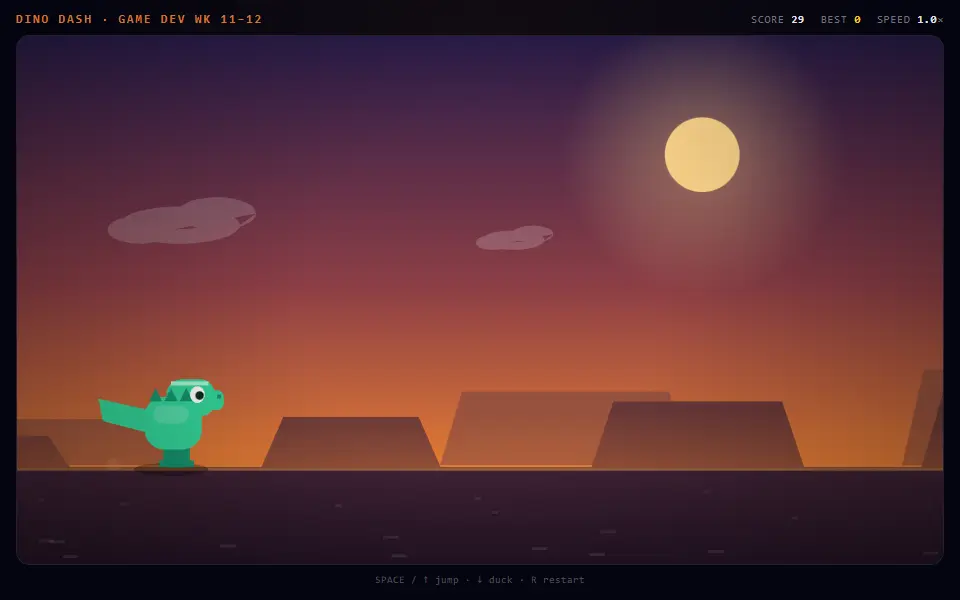
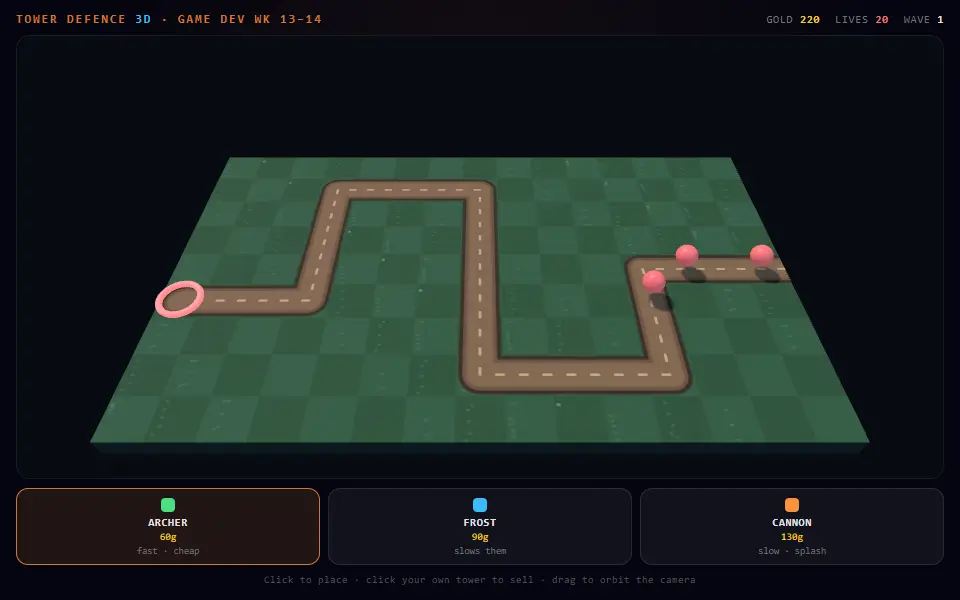
Live, on a real URL.
Tools & skills
The real thing, not a kids' version.
 PythonPygame
 Expo + React Native
 GitHub
 Replit
Maths + science woven in
Every project carries the maths and science its subject needs — coordinates and loops at Level 1, projectile physics and algebra at Level 2, probability and statistics in the AI track. Not a separate class. The same code.
The next rung
After Game Dev, most students go to
“The live format is a complete game changer.” We tried other platforms but they were all pre-recorded. The live small-batch format means my son gets real attention.
Questions about this course
- How much does it cost?
- The first class is free. After that you pay by the hour: ₹930 an hour in a small group (up to 4 kids) or ₹1,400 an hour for 1:1 — in the US, $20 or $30. Classes are three a week, one hour each, so a month is about 12 classes. You pay monthly and can stop anytime. Why that much: with at most 4 kids, each child gets about 15 minutes of the teacher every hour (in a class of 35 it is under 2), Ajay teaches every class himself, and your child finishes a real project every week or two.
- What are the class timings?
- Evenings after school, in your time zone. Every course is three 60-minute classes a week; the days in between are deliberate — that is when your child builds on their own, which is where most of the real learning happens. We pick the days and times with you after the free class.
- What if my child loses interest after a few weeks?
- It's the #1 parent fear — and we designed for it. Every session ends with "show and tell" where kids demo what they built. That ownership keeps them hooked. And if it truly isn't working, you are never locked in: you pay one month at a time and can stop anytime.
- Do I have to pay for a whole course up front?
- No. You pay month by month for the classes you take, and you can stop at the end of any month. There is nothing to sign up for in advance.
Not sure this is the right step?