

Level 1 · Start · Ages 8–14
Coding FoundationsPlan it.
Your child will leave able to break a problem into steps, plan it as a flowchart and turn the plan into working code — with four finished Scratch games that use loops, conditions and variables (the last one their own design), a method for finding and fixing bugs, and a Show Day presentation of their best build.
- Playable game
Week by week · 5 weeks · 5 projects
What they build, when.
Week 1 · classes 1–3THINK LIKE A PROGRAMMER
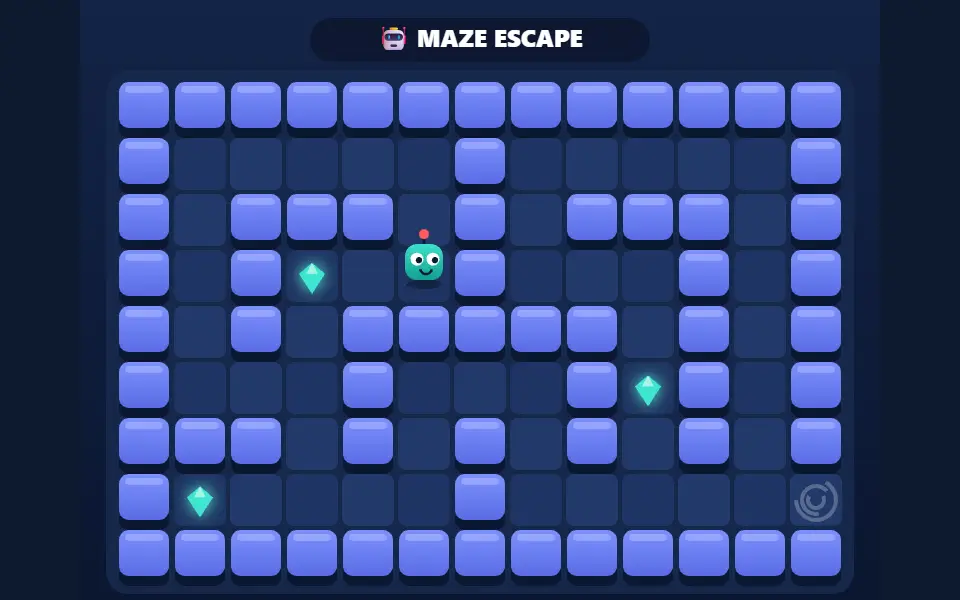
Maze Escape
Break a problem into steps: write the algorithm, draw the route as a flowchart, then build it — arrow keys, walls, a win screen. Logic puzzles and move-the-sprite challenges every class.
Play a real oneWeek 2 · classes 4–6LOOPS + PATTERNS
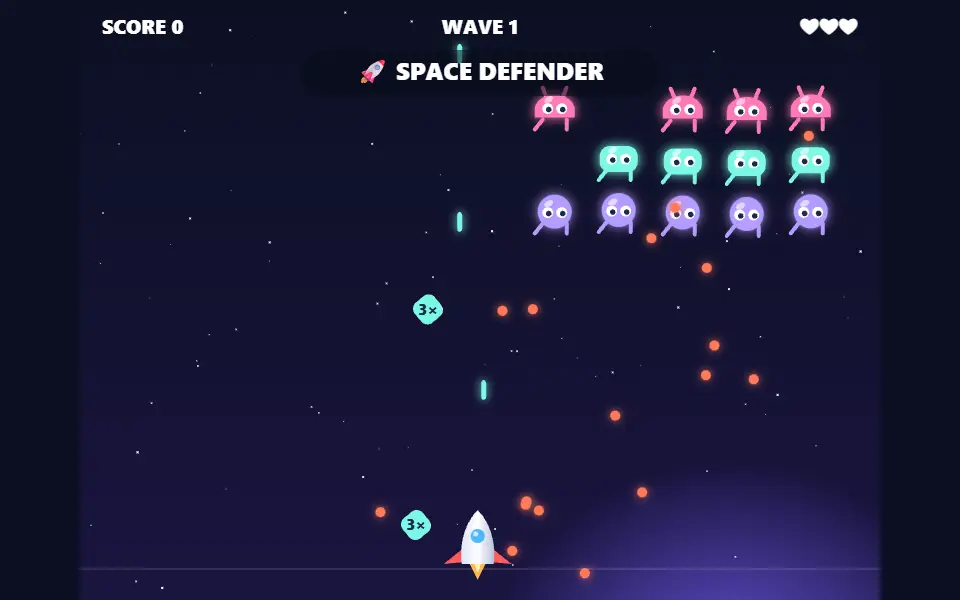
Space Defender
Spot the pattern, then let a loop do the repeating. Repeat, forever and nested loops send waves of enemies — and draw shapes the student predicts before running.
Play a real oneWeek 3 · classes 7–9DECISIONS + MEMORY
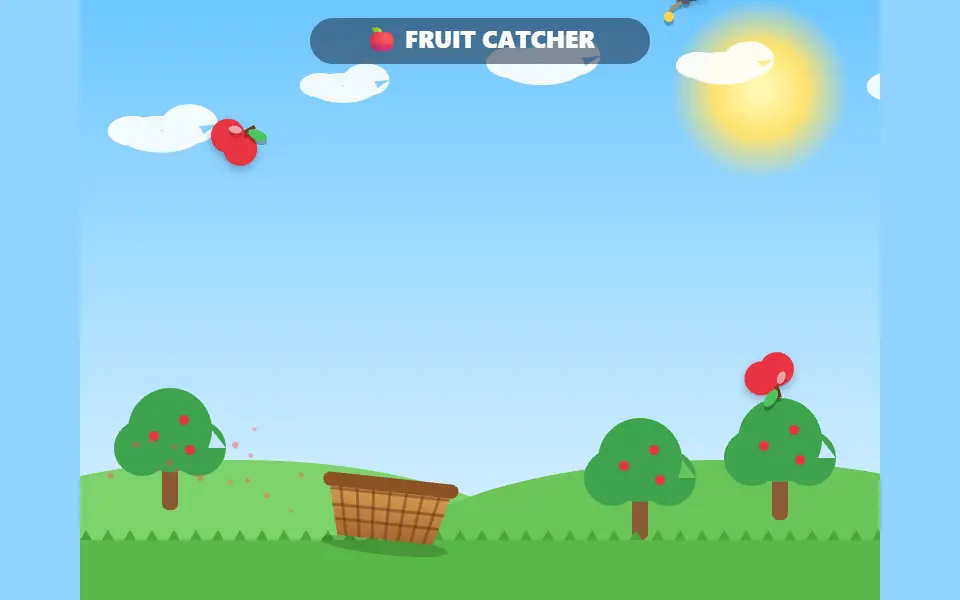
Fruit Catcher
If and if-else decide what happens; variables remember score, lives and a timer. Levels that get faster, and fix-the-bug tasks with a one-change-at-a-time method.
Play a real oneWeek 4 · classes 10–12THEIR OWN GAME
Their Choice: My Own Game
Plan a game of their own on paper first — the flowchart, the rules, the score — then build it with every idea from the course. The mentor guards the logic; the idea is theirs.
Play a real oneWeek 5 · classes 13–15DEBUG + SHOW DAY
SHOW DAY!
Start screens and high scores, a set of challenge problems and a short quiz — then present the best build to family. Certificates.
What your child will ship
Live, on a real URL.
Tools & skills
The real thing, not a kids' version.
Maths + science woven in
Every project carries the maths and science its subject needs — coordinates and loops at Level 1, projectile physics and algebra at Level 2, probability and statistics in the AI track. Not a separate class. The same code.
The next rung
After Coding Foundations, most students go to
Questions about this course
- How much does it cost?
- The first class is free. After that you pay by the hour: ₹930 an hour in a small group (up to 4 kids) or ₹1,400 an hour for 1:1 — in the US, $20 or $30. Classes are three a week, one hour each, so a month is about 12 classes. You pay monthly and can stop anytime. Why that much: with at most 4 kids, each child gets about 15 minutes of the teacher every hour (in a class of 35 it is under 2), Ajay teaches every class himself, and your child finishes a real project every week or two.
- What are the class timings?
- Evenings after school, in your time zone. Every course is three 60-minute classes a week; the days in between are deliberate — that is when your child builds on their own, which is where most of the real learning happens. We pick the days and times with you after the free class.
- What if my child loses interest after a few weeks?
- It's the #1 parent fear — and we designed for it. Every session ends with "show and tell" where kids demo what they built. That ownership keeps them hooked. And if it truly isn't working, you are never locked in: you pay one month at a time and can stop anytime.
- Do I have to pay for a whole course up front?
- No. You pay month by month for the classes you take, and you can stop at the end of any month. There is nothing to sign up for in advance.
Not sure this is the right step?